

SEO: What It Is, Why It Matters, and Types of SEO
What Is SEO?
Search Engine Optimization (SEO) is the process of improving a website’s visibility in organic search engine results. It focuses on optimizing content, technical structure, and authority so search engines can understand, index, and rank your pages for relevant queries.
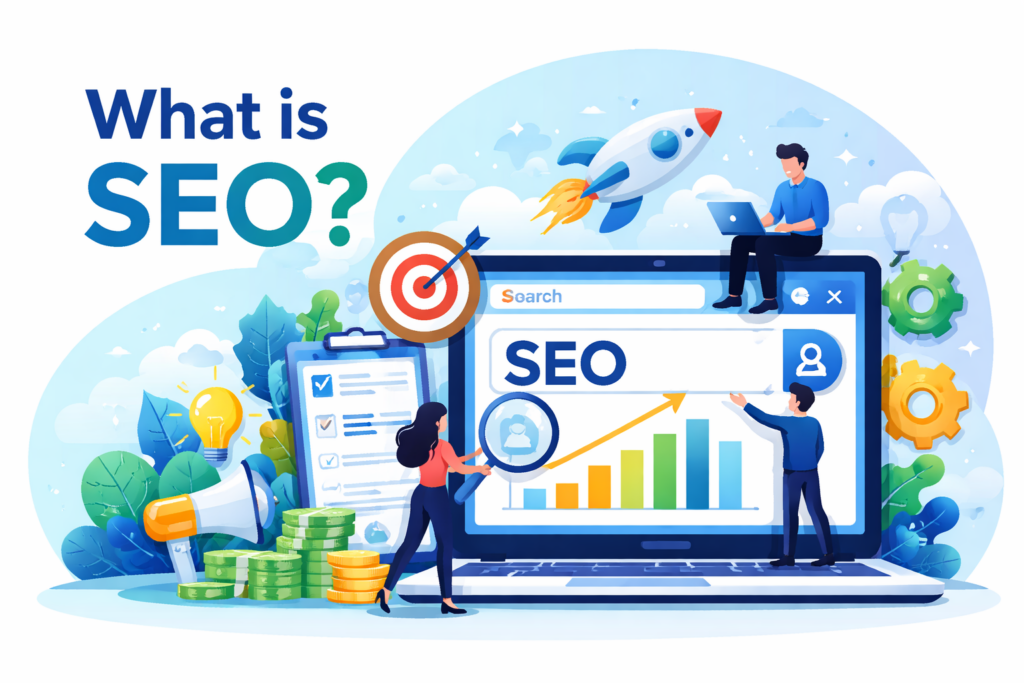
What Is SEO?
Search Engine Optimization (SEO) is the process of improving a website’s visibility in organic search engine results. It focuses on optimizing content, technical structure, and authority so search engines can understand, index, and rank your pages for relevant queries.
SEO is not just about keywords. It is about delivering the best possible answer to a user’s search while ensuring the website is technically sound and easy to navigate.
At its core, SEO includes:
- Creating high-quality, relevant content
- Optimizing page structure and HTML elements
- Improving website speed and usability
- Building authority through backlinks
- Enhancing overall user experience
When implemented correctly, SEO becomes a long-term growth channel that continuously attracts qualified traffic.
Why Is SEO Important?
SEO is important because most online experiences begin with a search engine. If your website does not appear in search results, your potential audience may never discover your business.
Unlike paid advertising, SEO generates organic traffic that can sustain itself over time. Strong rankings build trust, authority, and credibility in your industry.
Key Reasons SEO Matters
- Increases Organic Traffic – Higher rankings lead to more clicks and consistent visitors.
- Builds Brand Authority – Appearing at the top of search results increases trust.
- Improves User Experience – SEO encourages faster, mobile-friendly, well-structured websites.
- Generates High-Intent Leads – Search traffic often converts better because users are actively looking for solutions.
- Provides Long-Term ROI – Results compound over time compared to short-term paid campaigns.
For businesses of all sizes, SEO is a foundational digital marketing strategy that supports sustainable growth.
Types of SEO
SEO can be divided into several core categories. Each type focuses on a different aspect of optimization but works together as a unified strategy.
1. On-Page SEO
On-page SEO involves optimizing individual pages to improve relevance and rankings.
It focuses on content and HTML elements that are directly within your control.
Key components include:
- Optimized title tags and meta descriptions
- Proper use of header tags (H1, H2, H3)
- Strategic keyword placement
- High-quality, valuable content
- Internal linking
- Image optimization with alt text
On-page SEO ensures that search engines clearly understand what your page is about.
2. Off-Page SEO
Off-page SEO refers to actions taken outside your website to improve authority and credibility.
The primary goal is to build trust signals that search engines use to evaluate your site.
Important elements include:
- Link building from authoritative websites
- Digital PR and media mentions
- Brand citations
- Social visibility
Strong off-page SEO increases domain authority and helps pages rank higher.
3. Technical SEO
Technical SEO focuses on improving the backend structure of a website so search engines can crawl and index it efficiently.
It ensures your site performs well from a technical standpoint.
Key areas include:
- Website architecture
- XML sitemaps
- Robots.txt optimization
- Page speed improvements
- Mobile responsiveness
- Structured data (schema markup)
Without technical SEO, even high-quality content may struggle to rank.
4. Local SEO
Local SEO targets location-based searches. It is essential for businesses that serve specific geographic areas.
Core elements include:
- Business profile optimization
- Consistent name, address, and phone information
- Local citations
- Location-specific keywords
- Customer reviews
Local SEO helps businesses appear in map results and local search listings.
5. E-commerce SEO
E-commerce SEO is tailored for online stores and product-based websites.
It focuses on optimizing product and category pages for transactional searches.
Key practices include:
- Unique product descriptions
- Structured product data
- Optimized category pages
- Managing duplicate content
- Improving site navigation
This type of SEO drives high-converting buyers to product pages.
Bringing It All Together
SEO is a comprehensive strategy that combines content quality, technical performance, authority building, and user experience.
By understanding what SEO is, why it is important, and the different types of SEO, you create a strong foundation for long-term digital visibility and sustainable online growth.